AI Insights, Real Stories, and Game-Changing Guides for the Next-Gen Furnishing Professional.

Blog
Multi-Store Management: A Complete Guide for Growing Furnishing Businesses
Expanding from a single showroom to multiple locations is an exciting milestone for any furnishing business. Whether you're opening a second branch in the same city or expanding into new markets, growth also brings new operational challenges. Managing inventory across stores, maintaining consistent pricing, tracking sales performance, coordinating staff, and ensuring a seamless customer experience can quickly become overwhelming if your business relies on spreadsheets or disconnected software.
This is where multi-store management becomes essential.
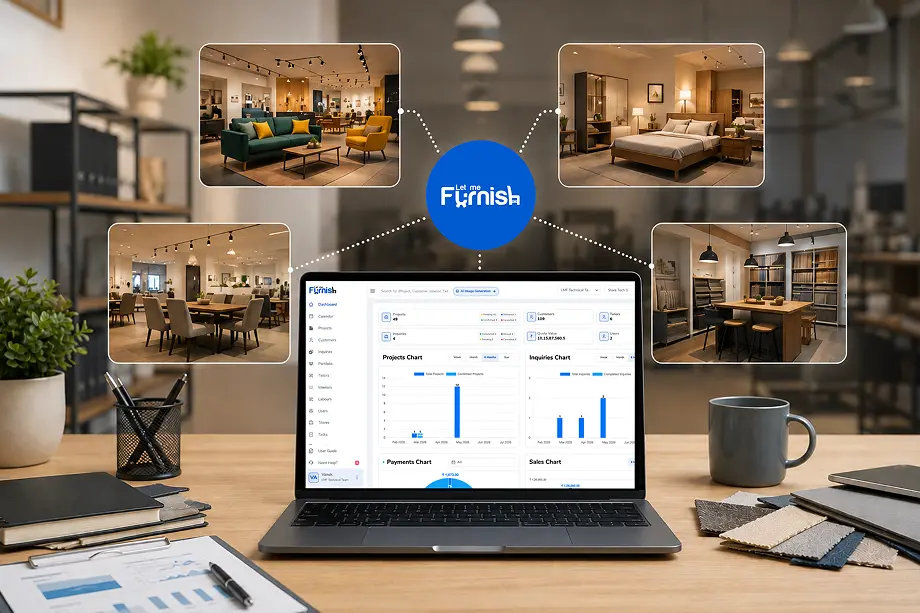
A well-organized multi-store management system helps furnishing businesses centralize operations, improve visibility across locations, and make informed decisions based on real-time data. Instead of juggling separate records for each branch, business owners can manage everything from one platform.
In this guide, we'll explain what multi-store management is, why it matters, the challenges of managing multiple furnishing stores, the key features to look for, and how the right software can support sustainable business growth.
What Is Multi-Store Management?
Multi-store management is the process of managing multiple retail outlets, showrooms, warehouses, or franchise locations from a centralized system.
Instead of operating each store independently, businesses can monitor:
- Sales performance
- Customer inquiries
- Inventory levels
- Quotations
- Staff productivity
- Vendor purchases
- Project progress
- Financial reports
This centralized approach ensures consistency and better control across all locations.
Why Is Multi-Store Management Important for Furnishing Businesses?
Unlike many retail businesses, furnishing companies manage more than product sales. They also handle customer consultations, quotations, site visits, customized orders, project execution, installation schedules, and after-sales support.
When multiple branches are involved, these processes become even more complex.
A centralized management system helps every branch follow the same workflow while giving business owners complete visibility into business performance.
Common Challenges of Managing Multiple Furnishing Stores
Growing furnishing businesses often experience operational issues such as:
Inconsistent Inventory Records
One branch may have available stock while another places unnecessary purchase orders because inventory isn't visible across locations.
Different Pricing Across Stores
Without centralized pricing, customers may receive different quotations from different branches, creating confusion and reducing trust.
Limited Visibility into Business Performance
Business owners often struggle to compare:
- Store-wise sales
- Project profitability
- Staff productivity
- Customer inquiries
- Pending payments
Communication Gaps
Sales teams, project managers, warehouse staff, and installation teams may work with outdated information if each branch uses separate systems.
Difficult Reporting
Preparing consolidated reports from multiple spreadsheets is time-consuming and prone to errors.
Benefits of Multi-Store Management Software
Centralized Business Control
Business owners can monitor every branch from a single dashboard without switching between different systems.
Real-Time Inventory Visibility
Staff can instantly check stock availability across all locations, reducing stock shortages and duplicate purchases.
Standardized Quotation Process
Using common quotation templates and pricing rules ensures customers receive accurate and consistent estimates regardless of the branch they visit.
Better Customer Experience
Customer information is accessible across locations, allowing teams to provide faster and more personalized service.
Improved Decision-Making
Centralized reporting helps identify:
- Top-performing stores
- High-demand products
- Revenue trends
- Underperforming branches
- Growth opportunities
Higher Operational Efficiency
Automation reduces manual work, minimizes errors, and helps teams focus on customer service instead of administrative tasks.
Essential Features Every Multi-Store Furnishing Business Needs
1. Centralized Dashboard
A single dashboard should provide an overview of:
- Sales
- Projects
- Inventory
- Payments
- Pending tasks
- Store performance
2. Multi-Location Inventory Management
The software should allow businesses to:
- Track inventory by branch
- Transfer stock between stores
- Monitor low-stock items
- View warehouse availability
3. Unified Customer Database
Customer records should be accessible from every location.
This includes:
- Contact details
- Project history
- Quotations
- Payments
- Communication logs
4. Store-Wise Sales Reports
Owners should be able to compare:
- Revenue by location
- Lead conversions
- Average order value
- Monthly sales growth
5. Project Tracking Across Locations
Monitor furnishing projects regardless of which branch manages them.
Track:
- Project status
- Installation schedules
- Material availability
- Pending approvals
6. Role-Based User Access
Different users should have different permission levels.
Examples include:
- Owners
- Branch managers
- Sales executives
- Account teams
- Warehouse staff
This improves data security and operational control.
7. Vendor Management
Manage suppliers centrally while allowing branches to create purchase requests when needed.
8. Financial Reporting
Track:
- Outstanding payments
- Branch profitability
- Expenses
- Revenue trends
- Cash flow
How Multi-Store Software Improves Daily Operations
Instead of maintaining separate records for each branch, employees work from one centralized platform.
For example:
- A customer visits Store A but wants installation handled by Store B.
- Inventory is available in another warehouse.
- The quotation is generated centrally.
- Project updates are visible to every authorized team member.
- Payments are tracked regardless of the branch involved.
This creates a smoother experience for both customers and employees.
Signs Your Furnishing Business Needs Multi-Store Management Software
Your business should consider a dedicated solution if you:
- Operate more than one showroom or branch.
- Manage separate inventory for different locations.
- Find it difficult to compare store performance.
- Experience communication gaps between branches.
- Spend hours preparing business reports.
- Use multiple spreadsheets to manage operations.
- Face duplicate data entry or inconsistent pricing.
- Plan to expand into new cities.
Frequently Asked Questions
What is multi-store management?
Multi-store management is the centralized management of multiple business locations using a single software platform for inventory, sales, projects, customers, and reporting.
Why is multi-store management important for furnishing businesses?
It improves operational efficiency, standardizes processes, enhances customer service, and provides real-time visibility across all branches.
Can multi-store software track inventory across locations?
Yes. A good system allows businesses to monitor stock levels, transfer inventory between stores, and reduce unnecessary purchases.
Is multi-store management suitable for small businesses?
Yes. Businesses planning future expansion can implement multi-store software early to establish standardized processes and simplify growth.
What reports should multi-store software provide?
The software should generate store-wise sales reports, inventory reports, project status reports, profitability reports, payment summaries, and business performance dashboards.
Best Practices for Managing Multiple Furnishing Stores
To maximize efficiency:
- Standardize workflows across all branches.
- Maintain a centralized customer database.
- Use consistent pricing and quotation templates.
- Monitor inventory in real time.
- Review store-wise performance regularly.
- Train employees on standardized processes.
- Automate repetitive tasks wherever possible.
- Use cloud-based software for real-time access.
Conclusion
Managing multiple furnishing stores doesn't have to mean managing multiple systems. As your business grows, centralized operations become essential for maintaining consistency, improving customer service, and making data-driven decisions.
A dedicated multi-store management platform helps streamline inventory, customer records, quotations, project tracking, financial reporting, and team collaboration across every branch.
LetMeFurnish is built specifically for furnishing businesses and supports multi-store operations through a centralized, cloud-based platform. From managing inventory across locations to tracking projects, monitoring branch performance, and standardizing workflows, LetMeFurnish helps growing furnishing businesses operate more efficiently and scale with confidence.